Installation

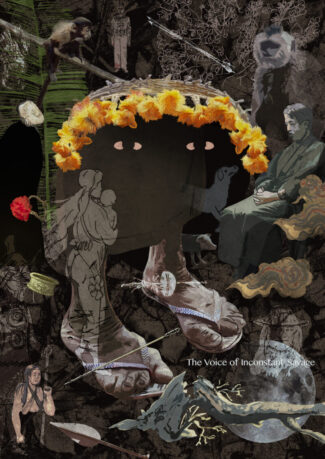
The Voice of Inconstant Savage
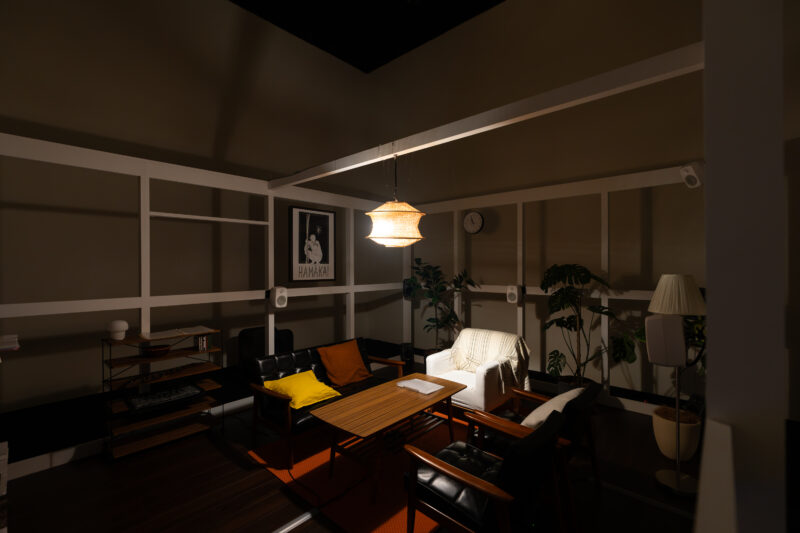
Commissioned for the Engawa – Japanese Contemporary Art Season programme organized by Calouste Gulbenkian Museum's Modern Art Center, The Voice of Inconstant Savage is an immersive installation that superimposes a prayer inspired by the story of a 16th-century Portuguese missionary, a chant from a Kakure-Kirishitan (hidden Christians) prayer – a religion rooted in Nagasaki Prefecture –, a chant from the Karawara spirits of the Awá indigenous people – who live in the Amazon rainforest – and a chorus of Western Gregorian chant. Morinaga questions the position of the aesthetics of inconstancy in relation to the discourse of the “savage” that modern society confronts.

Field recordings

Sombat Simla: Master Of Bamboo Mouth Organ
Simla is known in Thailand as one of the greatest living players of the khene, the ancient bamboo mouth organ particularly associated with Laos but found throughout East and Southeast Asia. His virtuosic and endlessly inventive renditions of traditional and popular songs have earned him the title ‘the god of khene’, and he is known for his innovative techniques and ability to mimic other instruments and non-musical sound, including, as a writer for the Bangkok Post describes, ‘the sound of a train journey, complete with traffic crossings and the call of barbecue chicken vendors’.

Field recordings

Yasuhiro Morinaga presents Field Recording Series Endah Laras [Surakarta, Indonesia]
Endah Laras [Surakarta, Indonesia]
A pioneer of Japanese Sound Design, Yasuhiro Morinaga’s field recording series has just launched the first edition! This first edition is featuring one of the most astonishing Indonesian singers, Endah Laras, who has been known for Javanese traiditional art like Wayang Kuri. The recording was conduced at the open-air studio, owned by Endah’s father who was regarded as one of the maestro of Javanese Wayang Kuri. The location has rich sonic environment and enriches natural resonance. Through her astonishing voice with different music instruments, such as ukulele and guitalele and other traditional Javanese instruments like gender and Javanese sitar, The music in itself beings us the feeling of Kroncong and Folk. Although we all know that Indonesia has strong tradition in gamelan music or ritual ceremonies, this recording work should be treated as a new music of modern Indonesian sound.

Performing arts

GONG ex MACHINA
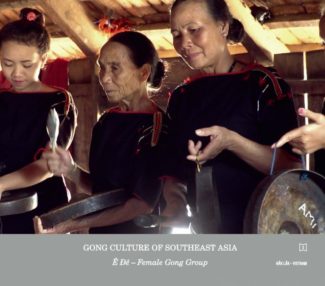
A sonic theatre "Gong ex Machina" is created based on the sound composition. The event will also highlight and develop the presence of sounds as its anchor. “Gong ex Machina”, is a word play from a technical term in ancient Greece in the 5th century: Deus ex Machina, which more or less means God in or out of the machine. The term refers to the technique to present actors playing as gods on the stage of a Greek tragedy using equipment like cranes, moving up and down, or a trap door, to allow the actor coming from below the stage. Hence, Gong ex Machina, a gong in or out of the machine. The concept of the performance evolves from a reflection following an extensive research by Morinaga on the gong culture throughout South East Asian countries. Gong ex Machina also stems from the history of an encounter between music or sound cultures and the modern technology of sound recorder and player: phonograph or gramophone. Similar to other encounters between tradition and modernity—happened against the background of the industrial revolution and European colonialism in the 17th to 20th century—the encounter of gong culture with gramophone is a story of a complicated acquaintance. Apart from stories of adaptation and appropriation are also stories of distortion and manipulation. It was an encounter that changed the way we experience and understand music, in particular, or sounds in general.