Installation

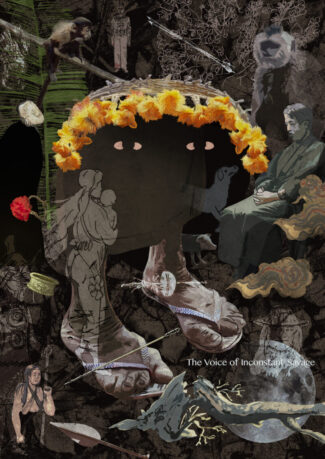
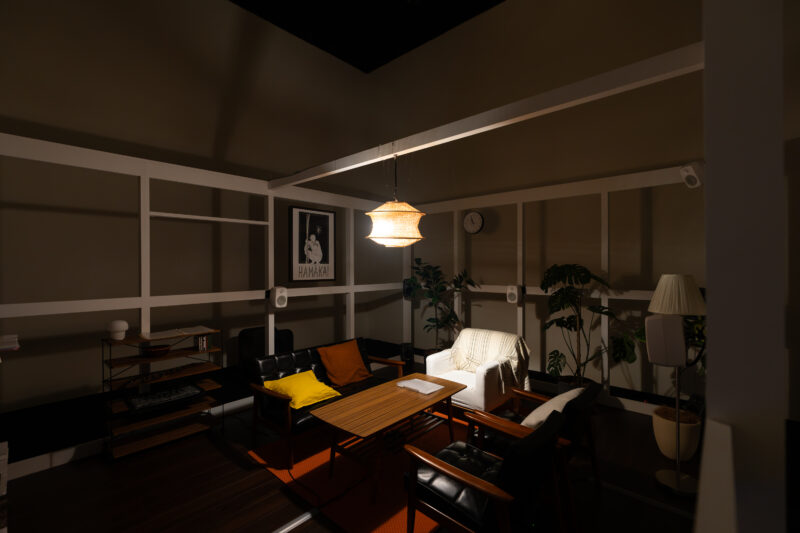
The Voice of Inconstant Savage
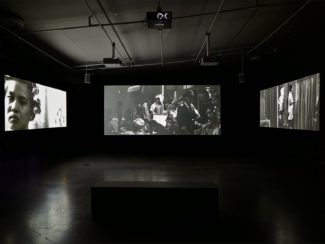
Commissioned for the Engawa – Japanese Contemporary Art Season programme organized by Calouste Gulbenkian Museum's Modern Art Center, The Voice of Inconstant Savage is an immersive installation that superimposes a prayer inspired by the story of a 16th-century Portuguese missionary, a chant from a Kakure-Kirishitan (hidden Christians) prayer – a religion rooted in Nagasaki Prefecture –, a chant from the Karawara spirits of the Awá indigenous people – who live in the Amazon rainforest – and a chorus of Western Gregorian chant. Morinaga questions the position of the aesthetics of inconstancy in relation to the discourse of the “savage” that modern society confronts.

Field recordings

Sombat Simla: Master Of Bamboo Mouth Organ
Simla is known in Thailand as one of the greatest living players of the khene, the ancient bamboo mouth organ particularly associated with Laos but found throughout East and Southeast Asia. His virtuosic and endlessly inventive renditions of traditional and popular songs have earned him the title ‘the god of khene’, and he is known for his innovative techniques and ability to mimic other instruments and non-musical sound, including, as a writer for the Bangkok Post describes, ‘the sound of a train journey, complete with traffic crossings and the call of barbecue chicken vendors’.

Event/Workshop

RECIPROCAL RESIDENCIES
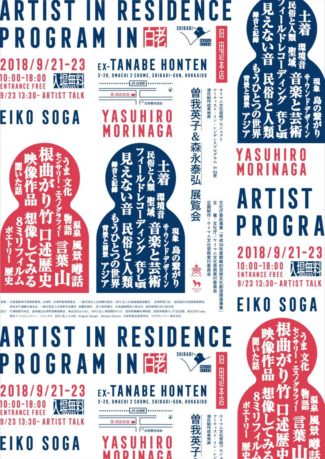
Reciprocal Residencies: Lijiang/Hokkaido consists of two reciprocating residencies between two Japanese and three Chinese artists in two rural settings. Curated by Jay Brown and Yasuhiro Morinaga, the residency is developing working methods to make the most of our disciplinary differences and time together. The participants are: Yao Chunyang, Wei Wei (aka VAVABOND), Li Jianhong, Marina Tanaka, Chiharu MK, Yasuhiro Morinaga, Jay Brown, Lijiang Studio, Tobiu Art Camp. This project enjoys the support of the Beijing Contemporary Art Foundation and the Asian Cultural Council. What does it take to make art while being responsible for small children? To that end, we titled our September 14th performance at Tobiu Art Festival “Art With/Out Small Children”, and it seems this will become the title for the Hokkaido segment of the project. Another, similar, working title for the project that may become the title for the Lijiang segment is “We Are All Great Parents.” We are foregrounding this issue because of the social, systemic, logistical obstacles for artists, nearly always mothers, to continue developing and presenting their art while raising small children (not to mention working a day job). Nearly all the artists in the project are in the middle of such challenges. Furthermore, we all have long-term interest in exploring ways of working “in the field”. Each of us has 10, 15, or more years of developing their own experiences with this question, an engagement which has formed our understanding of artistic research. What could each of us do in a totally unfamiliar place? How do we deal with certain inescapable dynamics, such as countenancing a history of cultural erasure, tourist development, the cosmologies of others, or the ontologies of places? There will be more to come on this project, but for now some snapshots of our time in Hokkaido:

Field recordings

Gong Culture of Southeast Asia「Bahnar」
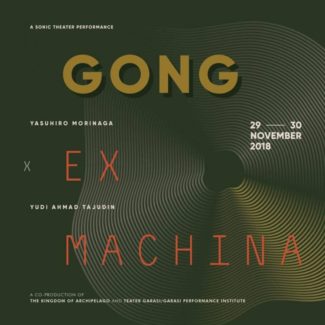
ベトナム中部高原地帯の北東部と南部に居住するバナ族は、モン・クメール語系に属する民族です。本録音は、サウンドデザイナーの森永泰弘が、2017年の5月と8月にベトナム中部をフィールドワークした際に記録した音源となっています。バナ族のゴング音楽は、主にフラットゴングとコブ付きゴングの両方を使い音楽を奏でます。ゴングは8~9つで1セットになっており、そのなかの6つがフラットゴング、残りがコブ付きゴングを使用します。儀礼や祝祭のときには編成が20(フラットゴングが10でコブ付きゴングが10)または22(フラットゴングが11でコブ付きゴングが11)に及ぶこともあるようで、主にフラットゴングがメロディー、コブ付きゴングがリズムを担い、インターロッキング奏法を使った演奏を行います。水牛供儀・葬式・収穫祭などの音楽を、彼らから記録させていただきました。バナ族の人たちは、ゴングを演奏する際、近所に生えている木枝をとってきてナイフで幹の部分を削り、それを撥にゴングを打ち鳴らしていました。しかし、大きなコブ付きゴングを叩いている方だけは、ジャックフルーツの実を撥に使ってゴングを打ち鳴らしていたのがとても印象的でした。ベトナム中部の少数民族にとって、ゴングは生活と密に関係した大事なシンボルであり、この音源もそんな彼らの気持ちが詰まったアルバムになっているといえるでしょう。