Installation

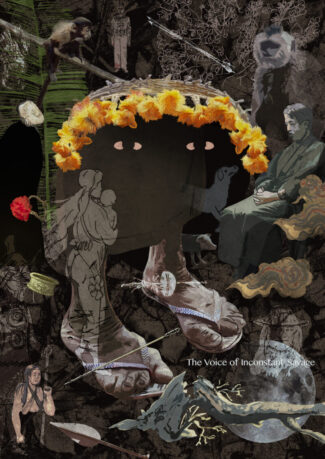
The Voice of Inconstant Savage
Commissioned for the Engawa – Japanese Contemporary Art Season programme organized by Calouste Gulbenkian Museum's Modern Art Center, The Voice of Inconstant Savage is an immersive installation that superimposes a prayer inspired by the story of a 16th-century Portuguese missionary, a chant from a Kakure-Kirishitan (hidden Christians) prayer – a religion rooted in Nagasaki Prefecture –, a chant from the Karawara spirits of the Awá indigenous people – who live in the Amazon rainforest – and a chorus of Western Gregorian chant. Morinaga questions the position of the aesthetics of inconstancy in relation to the discourse of the “savage” that modern society confronts.

Field recordings

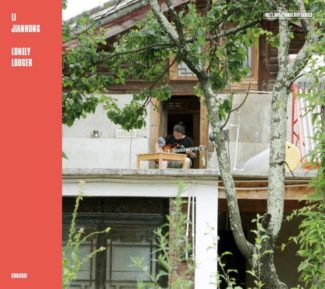
Sombat Simla: Master Of Bamboo Mouth Organ
Simla is known in Thailand as one of the greatest living players of the khene, the ancient bamboo mouth organ particularly associated with Laos but found throughout East and Southeast Asia. His virtuosic and endlessly inventive renditions of traditional and popular songs have earned him the title ‘the god of khene’, and he is known for his innovative techniques and ability to mimic other instruments and non-musical sound, including, as a writer for the Bangkok Post describes, ‘the sound of a train journey, complete with traffic crossings and the call of barbecue chicken vendors’.

Cinema

The Mental Traveller
The Mental Traveller is a poetic reflection on the nature of remembrance. It navigates through the mental spaces of people consumed by memories of lost time.The film meditates on the passing of time, external behaviors, habitual patterns of thought and the sensorial realities of five mentally disordered men inside the psychiatric ward in Chanthaburi Province, east of Thailand, in which it is filmed. The film was conceived from the director’s connections to his parents and companions as they went through states of sickness, impending death, dementia, grief, and temporary insanity. At the same time it echoes upon the turbulent years of political upheavals and repercussions in Thailand, resulting the nation in a state of delirium, lunacy and trauma.

Cinema

THE SCIENCE OF FICTIONS
In 1962, Siman, a solitary farmer, came to Gumuk, sandy bare land. Siman was witnessing a shooting of a fiction film about man landing on the moon. It was an unlucky day for him, Siman was caught by the army and got his tongue chopped off.Soekarno, the first president of Republic Indonesia, came to Gumuk, brought with him a Bolex 8mm camera. From the distance, he made a “the making of” man-landing-on-the-moon film. And the politics went so wrong. Under the new regime, A New Order of Soeharto, Siman was then being named as an insane person because he often moves stupidly, acting as if he is walking on the moon. In the village, Siman built a strange cubical building looking like a robotic machine that he saw in the sands. Siman designed an astronaut costume, and always uses a white helmet every time he goes out of his house. All the villagers agree that Siman is insane, but what he did is actually words and the only way he knows to show the truth. He is the only one who knew about the worlds biggest lie.

Cinema

籠城
旧制第一高等学校(通称、一高)は、1935年に本郷から駒場へと移転するが、そこでの生活は、本郷時代以来の「籠城主義」と呼ばれる自治寮での共同生活に支えられた、独特かつ閉鎖的なものだった。だが、1941年、1942年と戦時色が深まるにつれ、一高のアイデンティティともいえる「籠城主義」は、そのまま維持することはできなくなってくる。本作は、あたかも一高生らに同一化するかのように、アイデンティティの拠りどころを求めて研究に専念する大学院生の主人公「わたし」の意識を通じて、駒場時代の一高を描き出す。